
Rachel Thomson
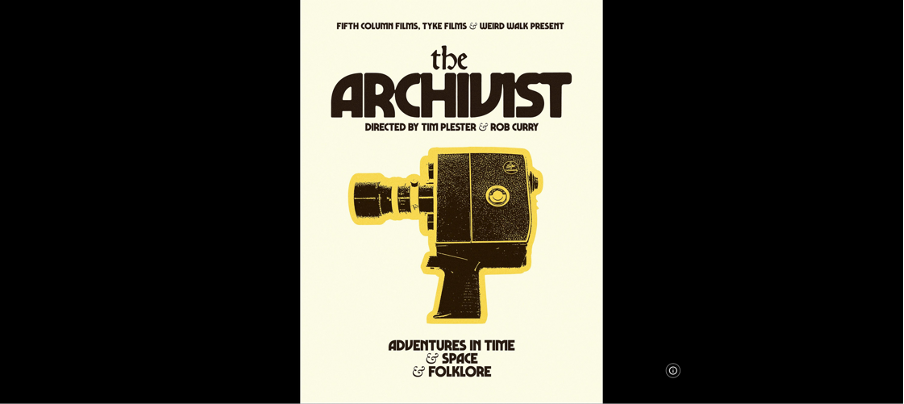
Doc Rowe is the archivist in a new film by Rob Curry and Tim Plester, previously responsible for the 2017 Ballad of Shirley Collins. Doc Rowe has spent his life attending and documenting ‘Calendar Customs’ in Britain – community traditions raining from Padstow Mayday, via Notting Hill Carnival to a bun day at an East London pub. Rowe turns up with his camera and video recorder and documents, year in and year out. Until that is Covid and lock-down, when the unthinkable happened, these calendar days were cancelled. During this interruption in normal time the film makers were able to interview Rowe and to both find a way of forging a story about what he does in face of enforced rest, accessing the extensive archive of documentary material – much of which has never been seen or used, even by Doc – and being there when restrictions ease and the traditions restart tentatively – no least because Doc himself is weakened by Covid.
Doc is not really an archivist, he is a collector and for him, participation and belonging are at the heart of his project. Being known and recognised by participants comes across in the film as a vital aspect of Doc’s sense of self, as is documenting generations of families as tradition is passed from grandfathers to fathers to sons. Many of the customs are focused on men and masculinities. The resulting collection is vast and rich. The film-makers get privileged access to the material for their film and are able to take us travelling through time as we watch the same practices captured by the same collector, with changing contexts, personnel and recorded through different media – all are in the mix as part of the repeated now-ness of the events that make up the calendar customs.
The story told by the film is firstly the story of the collector, Doc. And we follow his deliberations as he faces up to his mortality and the future of his archive. It is huge, and has over the years moved between different unsuitable holding solutions. The collection is bigger than the whole archive housed in Cecil Sharpe house which is supposed to be the national archive of the British Folk movement. Doc resists the idea of the archive being split up and returned to the places and people whose traditions it documents. Yet, he is also diffident about being the centre of the archive. The film-makers explain in a Q&A following the showing I attended that he does not want the film to be about him. Yet it must be, at least in part. By the end of the film we discover that the British Library agrees to take in the whole collection and to ensure that it is preserved, digitised and made accessible. The filmmakers are part of a group that crowd-sourced the funds to secure the digitisation of the collection. The Padstow material has already returned in digital form to the town and in due course the full audio and visual collection will become open access. The film-makers look forward to a long and slow process of screening The Archivist in village halls and homes, as part of a process of re-distribution that is made possible by this animation of the archive.
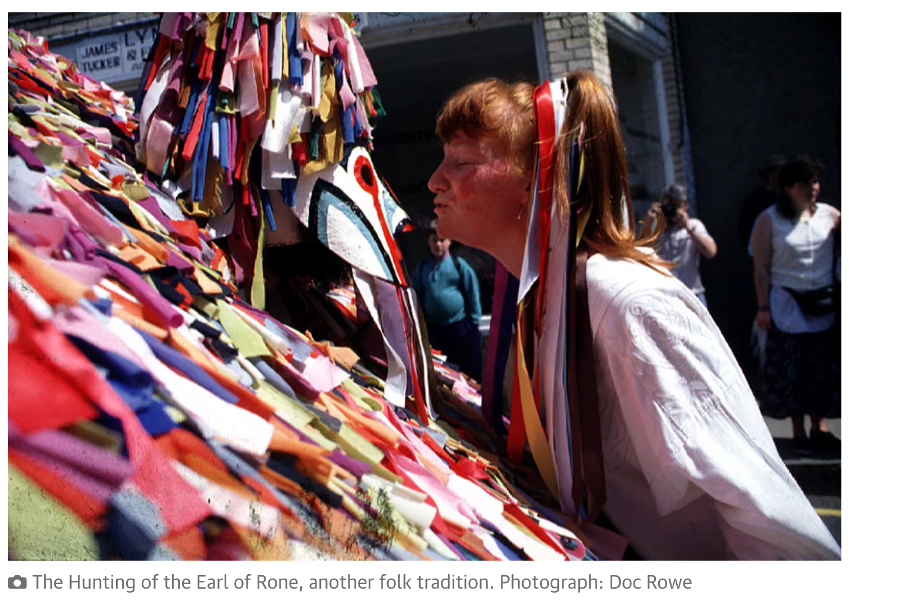
The film-makers were keen to assert that these rituals are rituals of working class culture, and are imbued with complicated meanings. By and large they have not been seen as valuable or important for anyone beyond the people taking part – for whom they may well be the most important thing. Doc Rowe took it upon himself to record these practices and moreover he persisted in this practice. It is as though he became caught up in something that was bigger than himself, and through his wandering documentary practices he not only created a record, he also connected disparate pieces into something bigger and perhaps something abstract – less connected with particular places. This might be condensed into the term ‘folk’ but could also be captured by the term ‘auto-biography’ – Doc’s own passions and preoccupations that might be explained by thinking of his story as a lower middle class boy who went to art school.
Now the whole folk enterprise is popular, respected and respectable. The calendar customs draw bigger and bigger crowds and folk is hip with young people. The working class Padstownians who are the custodians of the Obby Oss May Day tradition now live on the estates on the outskirts of the town, and no longer watch from the windows of fisherman cottages which are now holiday rentals. The parade becomes a focus for demarcating insiders and outsiders – and perhaps was always that. The film-makers noted that they did not feel very welcome. Their recordings capture how Doc Rowe is not always that welcome himself, looking in from the outside rather than embraced and recognised – reminding us that relations of knowing are deeply embedded in practices of collecting and archiving. Who collects who and for what?
So what did I learn from the film:
That traditions are about generation – a way of holding continuity and change in tension. Mortal bodies standing in for each other with objects, routes gestures. This is likely to be a conflictual matter, people get excluded as well as included.
Documentation is also about generation. The film-makers pick up Doc’s project through the act of documentation and become a new generation of lookers who are able to turn an ephemeral practice into something else that transcends the indexicality of the experience. Will they get caught up in something themselves in the way that Doc did?
Collaborations between documentarians and communities can be enabling and empowering as well as complicated by hierarchies and practices of othering. I write this as I am reading Michelle Caswell’s book Urgent Archives, in advance of her taking part in a new project on ‘critical open data’. I am struck by her words: ‘the stuff that gets collected is only important as it enables connections between people who use the stuff to share stories, transmit memory and build relationships’ (18). The process of collecting and archiving is first and foremost about people and the sharing of memory. It is also about enduring through time – whether that is enduring habits and commitments to ‘be there’ and take part, or the duties of documentation and curation. But this is not simply about hoarding and holding – it is also about the use of the material and forging new kinds of emotional connections that unite past-present and future. Michelle Caswell write about ‘a record that moves us’ ‘as it circulates – activated and reactivated, contextualised and recontextualised, creating anew record with each viewing’ (6). An emotion bond between the custom, the attention of the documentarian and the imagination of the film-makers who reanimate and care for the material.